
Why data matters to banks
Data protection and security are fundamental to banking. Consumers expect banks to handle financial data with the highest standards of confidentiality and trustworthiness, as has traditionally been the case. Trust and integrity are the banking sector's biggest assets, and innovation can only be realised if consumer trust is maintained.
Clear and harmonised rules for data access and sharing across the EU are essential. By establishing consistent regulatory standards, banks can unlock the economic benefits of data-driven innovation while maintaining the consumer protection and data security standards that underpin trust in the financial system.
The EU Data Economy
There is widespread consensus that data has become a strategic asset in the digital economy. Access to and re-use of data is considered a crucial step towards a competitive EU data economy and valuable opportunities for data-driven innovation will come from reusing and combining data, particularly across sectors. For banks, access to data beyond the financial sector can enable innovations which can help to enhance the customer experience, improve cybersecurity and consumer protection and strengthen risk management.
Setting the ambition to make the EU a role model and a leader in the data economy, on 19 February 2020, the European Commission published its Data Strategy, to create a genuine single market for data in the EU and address current issues in data access, data interoperability and quality, data governance, infrastructures and technologies.
EBF vision for a European Data Economy
The EBF believes that allowing further use, access and sharing of data on the basis of clearly defined rules would unlock wide economic benefits and become a key enabler of economic growth and boost Europe’s competitiveness globally. We, therefore, welcome the European Commission’s Data Strategy and its aim to “increase the use of, and demand for, data and data-enabled products and services throughout the Single Market”. See EBF submission to European Commission’s Data Strategy consultation, and key messages.



EBF Recommendations
If effectively implemented, the Data Strategy is a first step to promote a European Data Economy that benefits both consumers and firms and we encourage the Commission to consider the following actions:
Put users at the centre
Users should be at the centre of the data economy and initiatives should directly help individuals and firms to take control over their data in the digital environment – how it used and how it is shared.
21st century Develop Data portability
To empower individuals, we support enhancing the existing portability right for individuals under Article 20 GDPR Less as outlined in the European Commission’s Data Strategy so it is actionable and practical. To empower firms, we recommend the European Commission to work towards suitable data portability right for firms. Both actions should ensure that individuals and firms can share the data they generate in a way that is easy, secure, in real-time and on a repeated basis, through standardised interfaces such as APIs, and within the frame of user and firm data protection laws.
Adopt a cross-sectoral approach
An ecosystem of data, which is not limited by sectoral boundaries, is needed to realize opportunities for consumers and firms. Less Taking a cross-sectoral approach should, therefore, be one of the key drivers of the European Commission’s Data Strategy. To enable innovation, European Data space initiatives should start from the principle of making all data available on a cross-sectoral basis.
Encourage re-use of public sector data
The public sector in Europe has a central role to play in empowering users and facilitating the reuse of data. We encourage policymakers Less to be ambitious as they define relevant high-value data sets under the Open Data Directive.
DATA PROTECTION
The ever-increasing possibilities on data storage and use are revolutionising the way customers are served and businesses operate. Consumers expect banks to be able to deal with financial data in a highly confidential and trustworthy manner, as this has traditionally been the case.
There are challenges which may arise from the misuse of data, information asymmetries and data security. Such concerns are taken seriously by the banking industry, as trust and integrity are its biggest assets. Confidence in banks as trusted parties is essential for their reputation and business model, a fact which adds to the efforts and investments put into maintaining and improving set-ups ensuring the safety of customer data.
The benefits of digitalisation can only be reaped if each and every stakeholder adheres to the same high standard, and if the financial services’ industry can apply data-based innovation in a clear regulatory environment that is the same for all players.


General data protection regulation
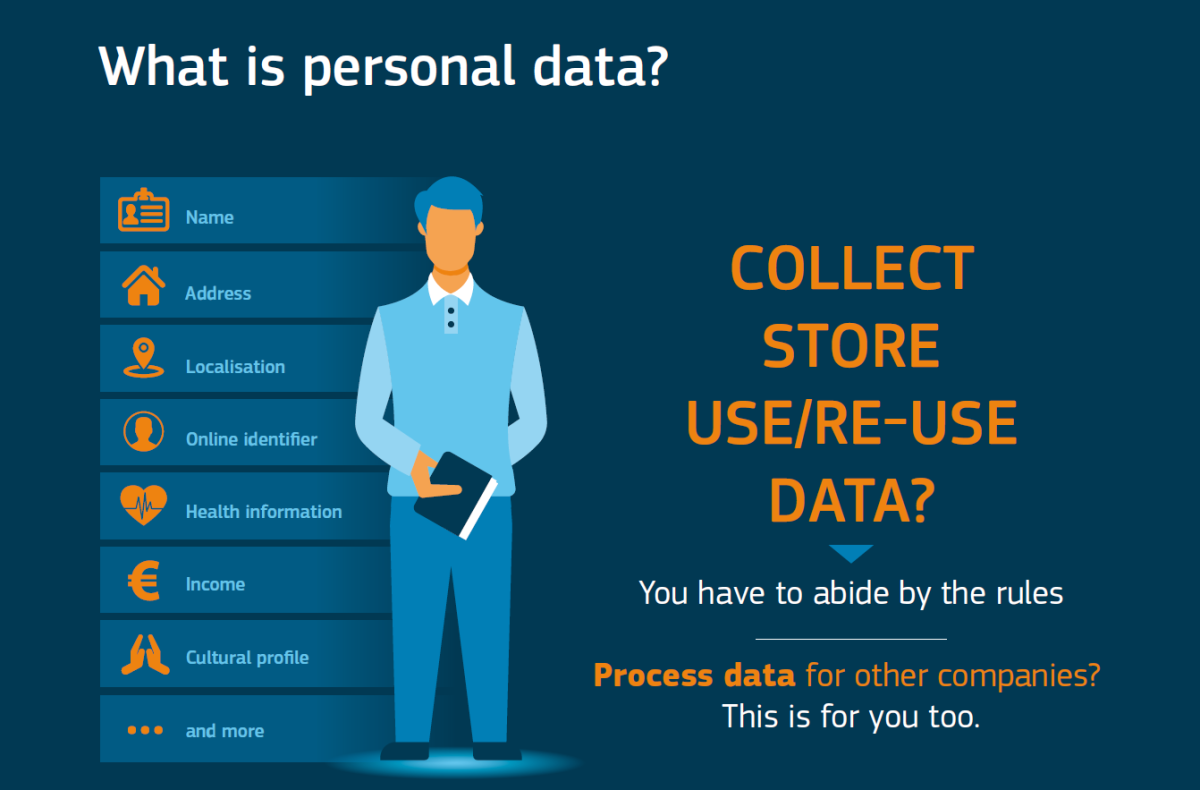
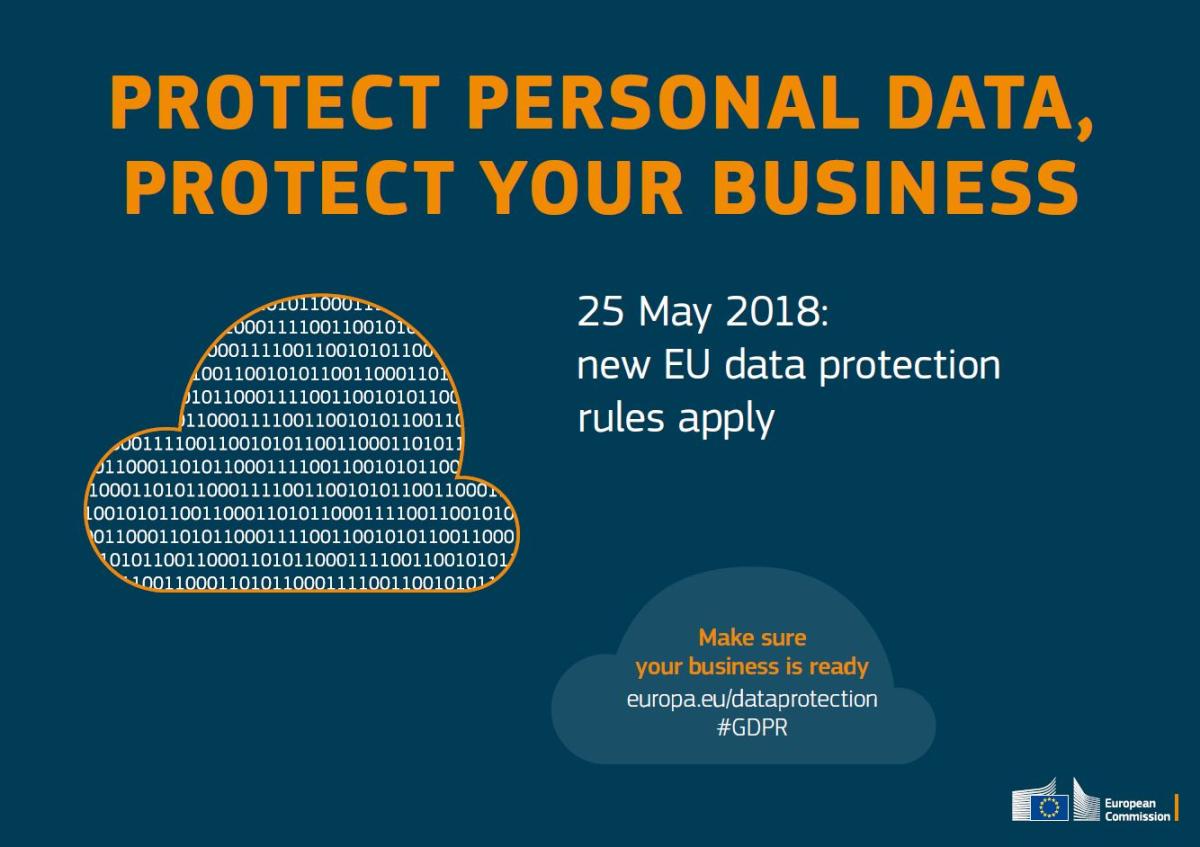
As of 25 May 2018, the General Data Protection Regulation (GDPR) has entered into force. The GDPR aims at giving data subjects in Europe greater control over their personal data and ensure the free movement of these data in the European internal market.
The EBF believes the new EU privacy regulation presents an opportunity for banks to build even stronger customer relationships, based at its core on trust. Clients in the banking sector have for long entrusted banks with their data. The sector is committed in making sure that client data is protected.
Implementing successfully the GDPR remains a key priority for the industry, in particular for the banking sector. Consumer data has been indeed at the heart of the banking business model for a long time and affects every level of banking activity (payments, retail and investment banking, insurance, cloud computing, cybersecurity, blockchain, fraud and anti-money laundering prevention, creditworthiness assessment, automated advice, social affairs, etc.).
Member of the European Commission Multistakeholder expert group to support the application of the GDPR
As a member of the European Commission’s Multistakeholder Expert Group to support the application of the GDPR, the EBF is committed in providing input to and working closely with the Commission and other relevant stakeholders at EU and national level to ensure the smooth application of the GDPR in the bankng sector.
As European Banking Federation (EBF) we believe that the General Data Protection Regulation (GDPR) is a key element for the creation of the European Union’s Digital Single Market, contributing to align data protection requirements across the EU.
Other resources
- ePrivacy Regulation: The EBF strongly believes we need a simple and technology-neutral regulation which will in turn provide strong and future-proof protections to consumers. Please see the join-industry letters co-signed by the EBF here and here.
- Cross-border data flows: When personal data is transferred outside the European Economic Area, special safeguards are foreseen to ensure that the protection travels with the data. Please see more details here. The EU should also ensure that trade agreements include protections against data flow restrictions and against requirements to locate data centres and computing facilities in-country as a condition of doing business. See the joint-industry letter on the European Commission Proposal on Data Flows in trade agreements.
- European Data Protection Board: The European Data Protection Board (EDPB) is an independent European body composed of representatives of the national data protection authorities and the European Data Protection Supervisor (EDPS). It contributes to the consistent application of data protection rules throughout the European Union. Please see the EDPB website.
Key EBF positions
EBF key messages on the European Commission’s Data Strategy - June 2020
Annex to the EBF’s consultation response on the European Commission Data Strategy - May 2020
Joint industry letter on the ePrivacy Regulation - November 2018
Joint industry letter on the future of the ePrivacy Regulation - May 2018
Global Services Coalition recommendations to the EU Member States regarding the Commission's proposal on data flows - April 2018
EBF Hosts Fifth Edition of Data Protection Officers Forum - April 2025
Call for Tender: EU-funded project “Shaping generative AI for a sustainable and fair services economy” - February 2025
Joint statement on Financial Data Sharing: Finding a sound approach for an effective Open Finance Framework - December 2024
EBF response to the European Commission Call for Evidence on the Report on the General Data Protection Regulation (Art. 97) - February 2024
The EBF Annual Data Protection Officers Forum reaches its fourth Edition - December 2023
EBF position on the European Commission’s proposal for a Framework for Financial Data Access (FIDA) - December 2023
EBF response to European Commission 'Have Your Say' Consultation on Financial Data Access Framework proposal - November 2023
EBF shares views on the digital euro, payment services and financial data access proposals - June 2023
EBF views on Open Finance: towards a fit-for-market approach - March 2023
Open Finance must be approached as part of the European data economy to drive innovation and new consumer experiences- October 2022
EBF Response to the European Commission’s call for evidence on Open Finance - August 2022
EBF response to the European Commission’s targeted questionnaire on Open Finance - July 2022
Joint Payments Industry Letter on Final EDPB Guidelines PSD2 GDPR Interplay - February 2022
Proposal for a regulation laying down harmonised rules on AI act: EBF response - September 2021
European Commission’s consultation on the Data Governance Act: EBF Response - February 2021
EDPB consultation on supplementary measures: EBF response - December 2020
EDPB Guidelines on PSD2 and GDPR interplay: Joint payment industry associations' letter - October 2020
Joint Industry Letter: Impact of CJEU Schrems II ruling on the framework for international data transfers - October 2020
EDPB’s consultation on the interplay of the PSD2 and the GDPR: EBF response - September 2020
AI inception impact assessment: EBF response - September 2020
AI in the banking industry: EBF position paper - July 2020
IIA large online platforms: EBF response - June 2020
European Commission Data Strategy: EBF response - May 2020
EBF key messages to inform the preparation of the EC report on the application of the GDPR - April 2020
Data Usage, Access & Sharing in The Digital Economy: EBF Position Paper - January 2020
Past events
EBF DIGITAL THURSDAYS 2021 - Competing in Digital Finance: New rules for a new market
The second Digital Thursday 2021 focused on the evolving competition landscape in digital financial services and the challenges this poses to the ongoing digital transformation of banking and banks. Access to relevant infrastructure and data, as well as the supervisory framework are key enablers to innovation. The event discussed the importance of ensuring fair competition among participants in the digital market and will offer exchange of views on some of the key policy debates such as the Digital Markets Act, access to and sharing of data, and the role Digital ID can play in this shifting landscape.
EBF DIGITAL THURSDAYS 2020 - European data economy & open finance: What does it all mean?
The second day of EBF’s Innovation & Cyber Thursdays 2020 was devoted to the European Data Economy and Open Finance. The European Commission, through its Data Strategy, has set a goal to build a Single Market for Data in Europe. It has also made fostering a data-driven financial sector one of its priorities, including a commitment to present a proposal for a new Open Finance Framework by mid-2022. These two initiatives are not mutually exclusive. During the day, the sessions focused on how these initiatives fit together, first by looking at what role policymakers and stakeholders can play to increase data sharing in Europe, particularly across sectors. The discussion zoomed in on what was happening in the financial sector, looking at a future EU open finance framework – the challenges and opportunities it could bring for firms and consumers, and a discussion on what the foundation for such a framework could look like.